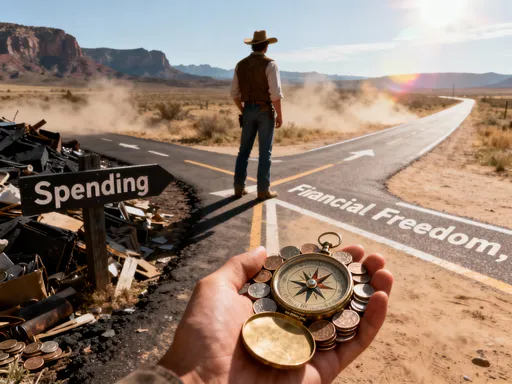
How I Built a Travel-Ready Retirement with This Investment Cycle Strategy
What if your retirement fund could grow while you’re sipping coffee in Italy? I once thought travel in my later years was a dream—until I discovered how aligning my investments with life stages changed everything. It’s not about huge risks or secret tricks. It’s about timing, consistency, and a smart cycle that works with you. Let me show you how I turned ordinary saving into a travel-powered retirement. The journey began not with a windfall, but with a simple realization: money managed with purpose can do more than just last—it can enrich. By syncing financial decisions with personal goals, especially the desire to travel after decades of work, a new kind of retirement becomes possible. One that’s not defined by scarcity, but by possibility.
The Retirement Dream That Feels Out of Reach
For many women in their 40s, 50s, and beyond, retirement evokes mixed emotions. On one hand, there’s relief—the end of daily commutes, tight schedules, and workplace pressures. On the other, there’s anxiety: will the money hold up? Can I really afford to see the world while staying financially secure? Travel often gets labeled as a luxury, something to be cut when budgets tighten. But for many, it’s not indulgence—it’s fulfillment. It’s walking through lavender fields in Provence, exploring ancient temples in Kyoto, or sharing a meal with family across the country. These experiences are not frivolous; they are part of a meaningful life.
The challenge isn’t necessarily the cost of travel itself, but the way traditional retirement planning fails to account for it. Most financial advice focuses on longevity—how to make savings last 30 years without running out. But longevity alone doesn’t guarantee quality. A retirement that merely avoids poverty is not the same as one filled with joy. I learned this after attending a friend’s 65th birthday celebration in Greece. She had saved diligently for decades, yet admitted she hadn’t budgeted for travel. “I didn’t think I could afford it,” she said. That moment struck me. How many others are quietly giving up on their dreams, assuming they’re financially out of reach?
The truth is, travel doesn’t have to be excluded from retirement planning. In fact, when integrated early and intentionally, it can become a driving force behind smarter financial decisions. Instead of viewing travel as an expense to fear, it can serve as a motivational target—something concrete to plan for. The key is shifting from reactive saving to proactive goal-based investing. This means designing a financial roadmap that doesn’t just prevent loss, but enables living. And that begins with understanding the investment cycle, a framework that aligns your portfolio with where you are in life—and where you want to go.
Why the Investment Cycle Changes Everything
Investing is often portrayed as a high-stakes game—something involving complex charts, risky bets, or insider knowledge. But for most people, especially those planning for retirement, it should be neither frantic nor mysterious. At its core, successful investing follows a natural rhythm: the investment cycle. This cycle recognizes that your financial needs and risk tolerance evolve over time. In your 30s and 40s, the focus is on growth. You have time on your side, so temporary market dips matter less. Your portfolio can afford to include assets with higher potential returns, even if they come with more volatility.
As you approach retirement—say, within 10 to 15 years—the emphasis shifts. Growth remains important, but so does stability. You’re no longer building wealth from scratch; you’re protecting what you’ve accumulated. This is the transition phase, where the mix of investments gradually becomes more balanced. Then, once retirement begins, the priority changes again: now, it’s about generating reliable income while preserving capital. This final stage isn’t about chasing gains—it’s about ensuring your money lasts, no matter how long you live or how often you travel.
I ignored this progression for years, staying too heavily invested in aggressive assets well into my 50s. When a market correction hit, I panicked. I sold at a loss, locking in fear instead of riding out the storm. That experience taught me a critical lesson: timing matters. Not market timing—nobody can predict short-term movements—but life timing. By aligning my investment strategy with my life stage, I stopped fighting the market and started working with it. The cycle didn’t eliminate risk, but it gave me a framework to manage it. More importantly, it allowed my money to support my lifestyle, not just survive it. Travel wasn’t an afterthought; it became a measurable goal within a structured plan.
Mapping Travel Goals to Financial Phases
Clarity begins with a simple question: When do you want to travel? For many, the answer lies in the first decade of retirement. Energy levels are still high, health is generally good, and curiosity remains strong. This period—what some call the “go-go years”—is prime time for exploration. I realized this was my golden window. I didn’t want to wait until I was too tired to hike a coastal trail or navigate a foreign city. So I structured my financial plan around that reality.
Early in my saving years, I focused on accumulation. I contributed consistently to retirement accounts, took advantage of employer matches, and invested in diversified index funds. These choices weren’t flashy, but they were effective. Because I had decades until retirement, I could tolerate fluctuations in value. The key was consistency—setting up automatic contributions so saving became routine, not a struggle. During this phase, I didn’t think much about travel costs. Instead, I thought about compound growth: how small, regular investments could multiply over time.
As retirement approached, I entered the transition phase. This is where many people make mistakes—either panicking and pulling out of the market or staying too aggressive out of habit. I chose a gradual shift. I began reducing exposure to volatile assets and increasing allocations to income-producing investments like dividend-paying stocks, bonds, and real estate investment trusts (REITs). This didn’t happen overnight. Over five years, I slowly rebalanced my portfolio to reflect my changing needs. The goal wasn’t to maximize returns at this stage, but to reduce risk and create a foundation for steady income.
By the time I retired, my portfolio was positioned to support my travel goals. I had a mix of assets designed to generate cash flow while preserving principal. This allowed me to withdraw funds without dismantling my nest egg. Travel wasn’t funded by dipping into emergency savings or relying on credit—it was built into the design of my financial plan. Mapping my goals to the investment cycle transformed travel from a dream into a planned reality.
Balancing Growth and Safety Without Overthinking
One of the biggest mental traps in retirement planning is the belief that you must choose between safety and growth. Many assume that to protect their savings, they must abandon all risk—and with it, the potential for returns. Others fear that moving to safer investments means losing ground to inflation. The truth is, you don’t have to pick one extreme over the other. The investment cycle provides a middle path—a way to balance both objectives over time.
In the early years, when I had time to recover from market downturns, I embraced growth-oriented investments. I understood that volatility was part of the process. A 10% drop in value didn’t mean I had lost money unless I sold. So I stayed the course, knowing that markets historically trend upward over the long term. But as retirement neared, I recognized that time was no longer my ally in the same way. A major market decline right before or after retirement could have lasting consequences. This is known as sequence of returns risk, and it’s one of the most serious threats to retirement security.
To address this, I adopted a glide path strategy—a gradual shift from growth to stability. Think of it like driving a car: when you’re speeding down the highway, you don’t slam on the brakes the moment you see your exit. You ease off the gas, signal, and slow down smoothly. The same principle applies to investing. I didn’t make sudden, emotional shifts based on headlines. Instead, I followed a pre-determined plan to reduce risk exposure over time. This meant increasing my allocation to bonds, cash equivalents, and other lower-volatility assets as I approached retirement.
This balance served me well during periods of market uncertainty. When stock prices dipped, I wasn’t forced to sell growth assets at a loss to fund travel or living expenses. I had a cushion of stable holdings that could provide income without disrupting the long-term growth portion of my portfolio. This approach didn’t guarantee perfect returns, but it provided peace of mind. And for someone planning to enjoy retirement through travel, peace of mind is priceless.
Creating a Sustainable Withdrawal Strategy
One of the most overlooked aspects of retirement planning is how you take money out of your portfolio. It’s not enough to save wisely—you also need a smart way to spend. The classic 4% rule suggests withdrawing 4% of your initial retirement savings each year, adjusted for inflation. While this rule has worked in many historical scenarios, it’s not a one-size-fits-all solution. Markets don’t follow scripts, and rigid rules can lead to problems when conditions change.
I learned this the hard way during a simulated retirement test using past market data. In one scenario, retiring just before a downturn led to portfolio depletion within 20 years, even with a 4% withdrawal rate. That was a wake-up call. I needed a more flexible approach. So I adopted a dynamic withdrawal strategy—one that adjusts based on market performance and portfolio health. Instead of taking the same amount every year, I set a range: a target withdrawal rate, a maximum in good years, and a minimum in cautious ones.
For example, in a strong market year, I might allow myself to withdraw up to 5%, using the extra funds for a longer trip or a premium experience. In a down year, I’d reduce discretionary spending and limit withdrawals to 3% or less. This flexibility protects the portfolio from being drained during tough times. It also means I’m not depriving myself during good ones. The key is having clear guidelines in place so decisions aren’t made out of emotion.
I also built in a travel buffer—a separate portion of my portfolio dedicated specifically to travel expenses. This isn’t a separate bank account, but a mental and strategic allocation within my overall plan. It’s invested in more stable assets, so short-term market swings don’t force me to cancel trips. Knowing this buffer exists allows me to book flights and accommodations with confidence, even when headlines are grim. A sustainable withdrawal strategy isn’t about cutting back—it’s about spending wisely so you can keep enjoying life for decades.
Tools and Habits That Keep the System Running
No financial plan works without discipline and regular maintenance. The investment cycle isn’t a set-it-and-forget-it strategy. It requires ongoing attention, not to chase every market trend, but to stay aligned with your goals. I review my portfolio twice a year—once in the spring and once in the fall. These reviews aren’t about making big, dramatic changes. They’re about checking progress, rebalancing if needed, and ensuring my allocations still match my risk tolerance and timeline.
One of the most helpful tools I use is automatic rebalancing through my investment platform. Over time, different assets perform differently, which can shift my portfolio away from its target mix. For example, if stocks do well, they may grow to represent a larger share of my portfolio than intended. Automatic rebalancing sells a little of what’s up and buys more of what’s down, keeping my strategy on track without emotional interference. This simple feature has saved me from making impulsive decisions during market swings.
I also rely on clear benchmarks. I track my portfolio’s performance against a blended index that reflects my asset allocation. This helps me evaluate whether my investments are doing their job—not to beat the market, but to meet my personal goals. I don’t compare myself to others or obsess over quarterly returns. My benchmark is whether I’m on track to fund my lifestyle, including travel, for the long term.
Beyond tools, habits matter. I keep a simple financial journal where I note major decisions, market thoughts, and travel plans. This helps me reflect on choices and avoid repeating mistakes. I also schedule an annual financial check-in with a fee-only advisor—not to get stock tips, but to validate my approach and catch blind spots. These practices aren’t glamorous, but they’re what make the system reliable. Discipline, consistency, and intentionality are the quiet engines behind lasting financial success.
Making Retirement More Than Just Survival
In the end, retirement is not a financial calculation—it’s a life chapter. How you spend your money should reflect how you want to spend your time. For me, that means mornings in foreign markets, quiet walks through historic towns, and the joy of discovering new cultures. These experiences aren’t distractions from financial responsibility; they are the reward for it. By designing my investment cycle around real, meaningful goals, I gave my money a purpose. And that changed everything.
My portfolio isn’t perfect. Markets fluctuate. Unexpected expenses arise. But because I planned with intention, I have resilience. I don’t live in fear of running out. I don’t cancel trips because of a news headline. My finances are not a source of stress—they are the quiet engine behind my adventures. This isn’t magic. It’s method. It’s the result of aligning money with meaning, and strategy with season of life.
For women planning for retirement, the message is clear: you don’t have to choose between security and joy. With a thoughtful investment cycle, you can have both. Start by defining what retirement truly means to you. Is it travel? Time with family? Learning new skills? Whatever it is, let that vision guide your financial decisions. Build a plan that grows with you, shifts as you age, and supports the life you want to live. Because retirement isn’t just about surviving—it’s about thriving. And with the right strategy, your golden years can be your most vibrant yet.