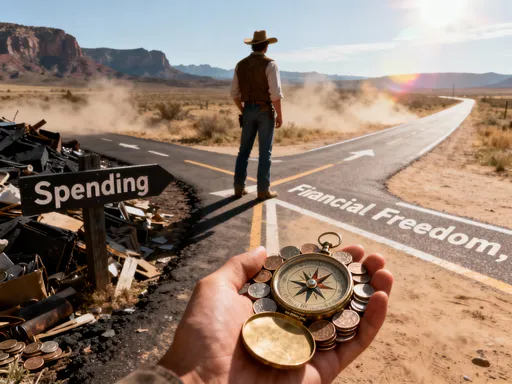
How I Survived a Business Crash and Found a Smarter Way to Maximize Returns
Failing in business isn’t the end—it’s often the beginning of real financial wisdom. I learned this the hard way when my company collapsed, wiping out years of effort. But in the wreckage, I discovered critical mistakes most entrepreneurs make when chasing returns. This is not a success story; it’s a survival guide. I’ll walk you through the hidden traps, the risky moves disguised as smart plays, and how to protect and grow value even after failure. What started as a personal collapse became a blueprint for smarter financial decisions—ones rooted not in ambition alone, but in discipline, foresight, and humility.
The Moment Everything Fell Apart
The silence was the first sign. Not a dramatic shutdown, not a final argument or angry email—just silence. That’s how it happened. One morning, I opened my laptop and realized no payments had cleared. Invoices were overdue, suppliers had stopped responding, and the bank balance showed a red number I couldn’t ignore. The business I had poured seven years into was gone. Not slowly, not with a plan, but with a quiet, irreversible collapse. It wasn’t just the loss of income—it was the loss of identity. I had tied my worth to the company’s success, and now both were in ruins.
The emotional toll came quickly. Shame. Isolation. Sleepless nights filled with replaying decisions—hiring too fast, expanding too soon, trusting projections over reality. But the financial fallout was worse. I owed money to vendors, had personal guarantees on leases, and had drained savings to keep operations afloat. The debt wasn’t just a number; it was a weight. I remember sitting at my kitchen table, staring at spreadsheets, realizing I had no clear picture of cash flow until it was too late. I had been chasing revenue growth without understanding profitability. Sales looked good on paper, but margins were thin, and overhead was rising faster than income.
Looking back, the warning signs were there. Late payments became normal. Customer complaints increased. I ignored them, convinced we were on the verge of a breakthrough. Overconfidence masked poor planning. I believed hard work and passion were enough. But passion doesn’t pay bills. What I lacked was a system—real financial tracking, risk assessment, and contingency planning. I was focused on scaling, not sustainability. And when the market shifted slightly—a key client pulled out, supply costs rose—the entire structure cracked. The collapse wasn’t sudden. It was the result of years of small, unchecked risks piling up until the foundation gave way.
The Hidden Traps in the Race for Returns
When a business fails, people often look for a single cause: bad timing, economic downturn, or competition. But in most cases, the real problem is not one event—it’s a pattern of decisions that prioritize returns over resilience. I made that mistake. I believed high returns meant success, so I chased them at all costs. I took on debt to expand, invested in unproven markets, and reinvested every dollar of profit back into growth. I celebrated revenue milestones while ignoring the fact that we were barely breaking even. This is a common trap: confusing activity with progress, and growth with health.
One of the most dangerous misconceptions in business is that leverage equals opportunity. I borrowed money to open a second location, convinced it would double profits. But leverage magnifies both gains and losses. When sales didn’t meet projections, the debt became a burden, not a tool. Interest payments drained cash, and I had to cut staff just to stay afloat. The pressure to deliver returns forced me into riskier moves—discounting prices, taking on low-margin clients, and delaying essential maintenance. Each decision made sense in the short term but weakened the business over time.
Another hidden trap is ignoring market signals. I was so focused on my vision that I missed shifts in customer behavior. New competitors offered better service at lower prices. Online platforms changed how people bought our product. I dismissed these changes as temporary trends. But markets evolve, and businesses that don’t adapt get left behind. I was chasing a version of success that no longer matched reality. This isn’t just about being observant—it’s about being willing to change course, even when it means admitting a strategy isn’t working.
The obsession with maximizing returns often leads to short-term thinking. I measured success quarterly, sometimes monthly, and made decisions based on immediate results. This created a cycle of pressure: push for more sales, cut costs, repeat. But real financial health isn’t built on spikes—it’s built on consistency. Profitability matters more than top-line revenue. Cash flow matters more than growth rate. And sustainability matters more than speed. The danger isn’t in wanting returns; it’s in pursuing them without understanding the risks involved. High returns without risk control aren’t smart—they’re侥幸, and侥幸 doesn’t last.
Why Risk Control Beats Return Chasing Every Time
After the collapse, I spent months studying people who had rebuilt after failure. Not the flashy success stories, but the quiet survivors—the ones who started again, slowly, and stayed in business for years. What they had in common wasn’t ambition or charisma. It was discipline. They didn’t chase high returns. They focused on minimizing losses. Their first question wasn’t “How much can I make?” It was “How much can I afford to lose?” That shift in mindset changed everything.
Risk control isn’t about playing it safe. It’s about playing it smart. It means designing your business and investments so that a single mistake doesn’t wipe you out. I learned to stress-test every decision: What if sales drop by 30%? What if a key supplier fails? What if interest rates rise? Running these scenarios helped me see vulnerabilities I had ignored before. I started setting loss thresholds—clear limits on how much I was willing to risk on any one venture. If a project exceeded that limit, I didn’t proceed, no matter how promising it seemed.
Preserving capital became my priority. I realized that losing 50% of your money doesn’t just set you back—it requires a 100% gain just to break even. That’s a brutal math most people overlook. A 20% annual return sounds impressive, but if you lose half your capital along the way, you’re starting from far behind. That’s why protecting what you have is more powerful than chasing what you don’t. I began to measure success not by peak returns, but by consistency and recovery speed. How quickly could I bounce back from a setback? How well could I absorb shocks without collapsing?
This approach changed how I viewed opportunity. Instead of asking, “Could this make me rich?” I asked, “Can I survive if it fails?” That doesn’t mean avoiding risk—it means managing it. I started using tools like diversification, cash reserves, and phased investments. I entered new markets slowly, with small commitments, and scaled only after proving stability. I accepted lower returns in exchange for greater control. Over time, this strategy produced more reliable growth. Not explosive, not viral, but steady. And steady wins in the long run.
Rebuilding with a New Financial Mindset
Rebuilding wasn’t about recreating the past. It was about redefining success. I no longer measured progress by revenue, headcount, or office size. I measured it by stability, cash flow, and peace of mind. My new financial mindset was built on three principles: patience, prudence, and learning. I started small, with a service-based business that required minimal overhead. I reinvested profits slowly, never taking on debt unless absolutely necessary. Every dollar earned was evaluated not just for growth potential, but for risk exposure.
Assets took on a new meaning. Instead of seeing them as tools for quick profit, I saw them as foundations for long-term security. A reliable income stream mattered more than a speculative investment. A well-maintained vehicle was more valuable than a flashy one with high payments. I prioritized liquidity—keeping enough cash on hand to cover six months of expenses. This wasn’t exciting, but it was empowering. I was no longer one bad month away from disaster.
I also diversified. My income now comes from multiple sources: consulting, online courses, and a small portfolio of dividend-paying stocks. None of these generate huge returns on their own, but together, they create a buffer. If one stream slows, others can compensate. This reduces pressure to chase every opportunity. I learned to say no—to deals that seemed too good to be true, to partnerships that required blind trust, to growth that demanded unsustainable effort.
Perhaps the biggest change was letting go of ego. I used to believe that success meant being the biggest, the fastest, the most visible. Now, I see success as sustainability. It’s not about outperforming others; it’s about outlasting mistakes. I avoid decisions driven by pride or fear of missing out. I focus on what I can control: costs, cash flow, customer satisfaction, and continuous learning. This mindset isn’t flashy, but it’s resilient. And resilience is the real foundation of lasting returns.
Practical Strategies That Actually Work
Theory is useless without action. After my failure, I developed a set of practical strategies—simple, repeatable, and tested in real conditions. These aren’t complex financial models. They’re habits and systems that prevent the same mistakes from happening again. The first is the cash flow buffer. I now keep a minimum of 20% of monthly expenses in a separate account, untouched unless absolutely necessary. This isn’t an emergency fund for personal use—it’s a business survival fund. It covers unexpected delays, shortfalls, or market dips without forcing drastic cuts.
Second, I conduct regular financial health checks. Every quarter, I review key metrics: profit margins, debt-to-equity ratio, customer acquisition cost, and retention rate. I don’t wait for problems to appear. I look for early warning signs—like declining margins or increasing customer complaints—and address them immediately. This proactive approach prevents small issues from becoming crises. I also track personal financial exposure. If the business is tied to my credit, I know exactly how much I’m on the line for—and I keep that number low.
Third, I use clear exit rules. Before starting any project or investment, I define the conditions under which I will walk away. For example: if a new product doesn’t break even within 12 months, I discontinue it. If an investment loses 15% of its value, I reassess or sell. These rules remove emotion from decision-making. I’m not gambling on a turnaround; I’m following a plan. This discipline has saved me from throwing good money after bad.
Finally, I use a “failure scenario” checklist. Before committing to any new venture, I ask: What’s the worst that can happen? Can I afford it? Do I have a recovery plan? Who will be affected? Answering these questions forces realism. It doesn’t kill ambition—it focuses it. I still take risks, but only when I understand the downside. These strategies aren’t glamorous, but they work. They’ve helped me avoid major losses, maintain stability, and grow at a sustainable pace.
The Psychology of Financial Recovery
Failure doesn’t just damage finances—it shakes confidence. The emotional aftermath is real. I struggled with fear, regret, and self-doubt. I avoided talking about the business, afraid of judgment. I felt like a fraud. But I also felt restless—the urge to jump back in, to prove I could succeed. That rush to recover is dangerous. Many people, after a loss, make impulsive decisions to regain what they lost. They take bigger risks, ignore warnings, and end up deeper in debt. I almost did the same.
Emotional discipline is as important as financial planning. I learned to recognize cognitive biases—mental shortcuts that lead to poor choices. Loss aversion, for example, makes people hold onto failing investments too long, hoping to break even. Overcompensation drives others to chase high-risk opportunities to “make up” for losses. I started journaling my decisions, writing down the reasons behind each move. This created distance between emotion and action. I also sought honest feedback from mentors who had experienced failure. Their perspective helped me see my situation clearly, not through the lens of shame or urgency.
I set emotional guardrails. For example, I gave myself a six-month cooling-off period before starting anything new. During that time, I focused on learning, not earning. I read financial books, took courses, and reflected on what went wrong. I also practiced mindfulness—simple techniques to manage stress and stay present. This didn’t erase the pain, but it prevented it from driving my decisions. I realized that healing takes time, and rushing back increases the odds of repeating the same mistakes.
Financial recovery isn’t just about money. It’s about rebuilding trust—in yourself, in your judgment, in your ability to make sound choices. That trust comes from consistency, not one big win. Each small, disciplined decision strengthens it. Over time, confidence returns—not the overconfident kind, but the quiet assurance that comes from knowing you have a system that works.
Turning Failure into Lasting Financial Strength
In the end, my business failure became the most valuable lesson of my financial life. It taught me that maximizing returns isn’t about speed, scale, or shortcuts. It’s about strategy, patience, and self-awareness. The collapse forced me to confront my assumptions, rebuild with discipline, and focus on what truly matters: sustainability, resilience, and long-term value. I no longer measure success by how much I make in a year, but by how well I can withstand a downturn.
The smarter way to maximize returns isn’t to chase them—it’s to protect what you have, manage risk, and grow steadily. This approach doesn’t make headlines, but it builds lasting wealth. It allows you to sleep at night, to plan for the future, and to help others without fear of collapse. I now mentor small business owners, sharing the lessons I learned the hard way. I emphasize not just financial tools, but mindset shifts—how to think differently about risk, failure, and success.
True return isn’t just financial. It’s the peace of mind that comes from knowing you’re prepared. It’s the confidence to make decisions without panic. It’s the freedom to walk away from bad deals because you don’t need them. My failure didn’t destroy me—it refined me. And if you’ve faced a similar setback, know this: you’re not alone, and you’re not finished. With the right mindset and practical strategies, you can turn loss into strength, and build a financial future that lasts.